
Every organization we link to: local tourism offices, the state and federal agencies that manage the land, the nonprofits and clubs that keep access open, and the universities doing the research.
West Virginia has roughly 1.5 million acres of public land and a handful of places that carry almost all of the attention. The consequence is that a great deal of very good ground sits nearly empty, usually for one of three reasons: nobody has heard of it, the road in is gated or rough, or it is undeveloped and has nothing to advertise. Those are the places below — of them across regions.
Almost Heaven Swings
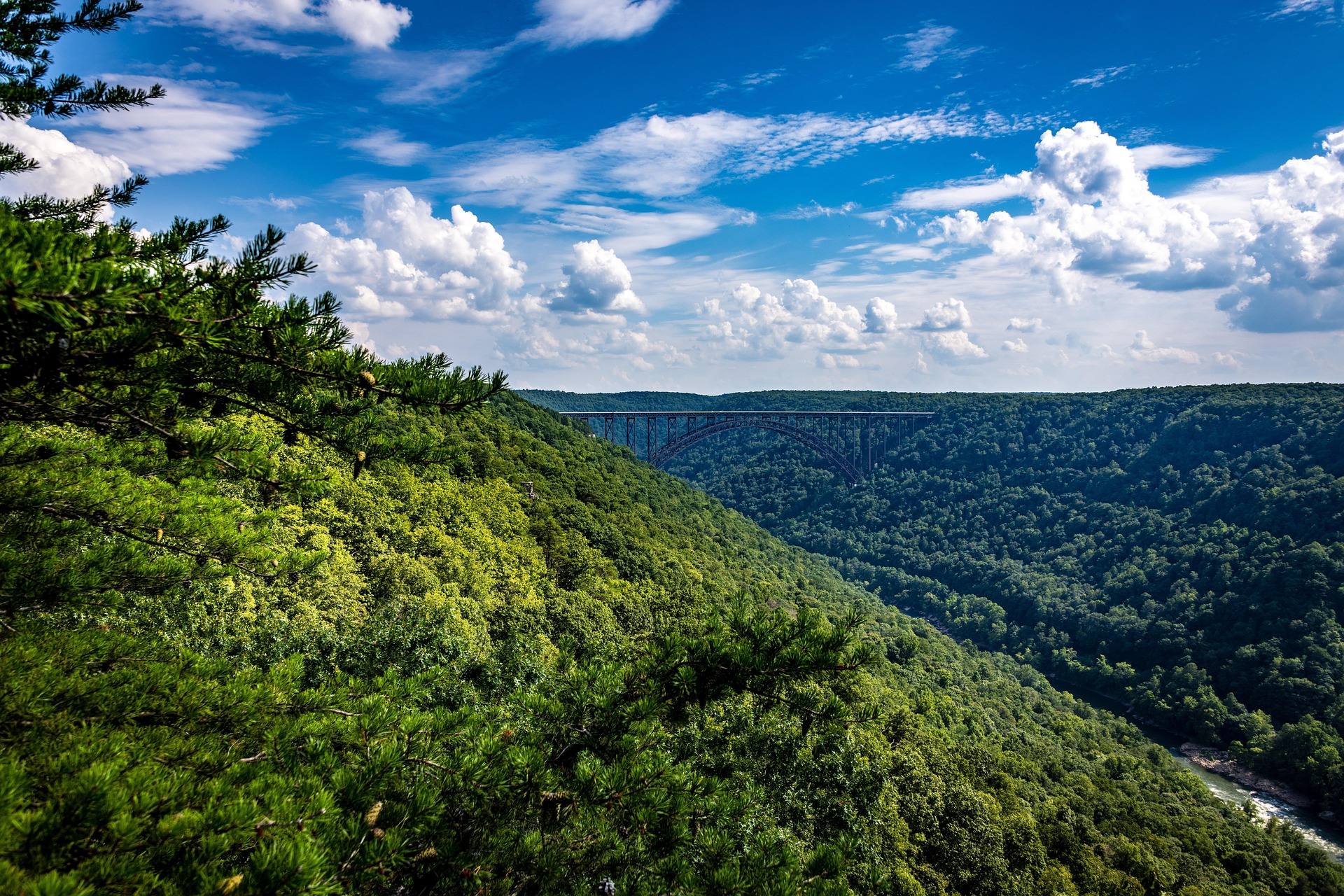
Two different kinds of state park
Watoga State Park sits in Pocahontas County at just over 10,100 acres, the largest state park in West Virginia; Holly River is second at 8,101. The Civilian Conservation Corps built most of it between 1933 and 1942: stonework, timber cabins still rented today, an 11-acre lake, an arboretum, and connections to the Greenbrier River Trail and Calvin Price State Forest.
Twin Falls Resort State Park covers 3,776 acres in Wyoming County, in the Southern Coalfields. It is one of the state's ten resort parks, which means a full lodge with a restaurant and conference space, plus a golf course and two waterfalls, on Black Fork and Marsh Fork. Riders use it as a Hatfield-McCoy base.
Neither park charges admission, since West Virginia collects no entrance fee at any of its 35 parks or 9 forests. You are choosing between a CCC-era cabin-and-campground park and a lodge park with a golf course.
Camping, cabins and the booking window
Everything a camper needs is published at Watoga. Beaver Creek has 38 sites and Riverside 50, all on 50-amp electric. Weekend stays require a two-night minimum, worth knowing before a Saturday drive-up. Camping runs April through October, and campgrounds reserve through the West Virginia State Parks system, generally up to a year out.
Twin Falls lists camping, but no site counts, hookups or rates appear in its record. Reserve through the same statewide system, ask where to park a trailer if you are hauling machines, and expect no workaround: dispersed camping is not permitted in state parks.
Cabins are a different race. Bookings open one year ahead, and Watoga is among the parks that fill for summer weekends and all of October within days. For a camper choosing today, Watoga settles it: known loop sizes, every site on 50-amp, the two-night rule in advance.
A trail network against three named walks
Twin Falls tells you its distances. Falls Trail is 1.25 miles, paved to Marsh Fork Falls and unpaved onward to Black Fork Falls. Pathfinder is 2.5 miles with about 500 feet of gain. Poke Hollow runs 3.5 miles to the highest point in the park. Linking all three is a full day, with Pioneer Farm on the grounds between them.
Watoga hikes at another scale. Five and a half miles of the Allegheny Trail cross the park, rated moderate to difficult; the network runs into Calvin Price State Forest, 9,482 acres with no facilities at all; and the Greenbrier River Trail is there for long flat mileage. Ann Bailey Lookout Tower has the best view.
That forest boundary matters in autumn. State forests mostly permit hunting in season while state parks generally do not, so a walk from Watoga into Calvin Price between October and January calls for blaze orange, on you and on the dog.
Lake water on one side, two creeks on the other
The water at Watoga is an 11-acre lake restricted to electric trolling motors, gasoline prohibited, quiet enough for a first-time paddler; horsepower rules vary lake by lake statewide and this is the strict end. Boat rentals run Memorial Day to Labor Day, and a life jacket must be aboard for everyone in any vessel, kayaks and paddleboards included.
Twin Falls has no lake in its record. Two waterfalls means two streams, Black Fork and Marsh Fork, and Falls Trail follows the water for 1.25 miles if you want to look before you rig. Treat it as small-stream fishing unless the park says otherwise.
Neither record names a species or a stocking date, and you do not have to guess. A fishing license is required at 15 and older, stocked trout water needs a trout stamp, WVDNR posts stocking by the end of each business day and runs a hotline on 304-558-3399, and special-regulation waters post their rules at the access point.
Night skies, the Quiet Zone and thinly listed activities
Dark sky is Watoga's clearest advantage. The park holds an International Dark Sky Park designation, and its corner of Pocahontas County lies inside the National Radio Quiet Zone, where transmissions are restricted by law: no cell service, exceptional darkness. Check the moon phase, and ask what naturalist programming falls on your dates.
Twin Falls has no dark sky designation and no nature programming beyond Pioneer Farm, which is missing information rather than proof of a poor sky. Both parks also list activities their records do not describe: disc golf at Twin Falls with no layout or location, horseback riding at Watoga with no bridle mileage or stable. Call each office before counting on either.
Riding, bikes and coalfield ground
Riders know Twin Falls because of the Hatfield-McCoy systems, which sit nearby rather than inside the park. Every rider needs a Hatfield-McCoy permit, sold online and through local vendors at separate resident and non-resident prices; helmets are required under 18; and riding undesignated public land is prohibited, so the permitted systems are the whole map. Gilbert and Man are the trail towns.
The Watoga record names no ATV or UTV riding at all. If motorized trail riding is the trip, the comparison is not close, and Twin Falls is the base.
Mountain bikers get less help. No bike-specific trail or mileage appears in the Watoga record, and the Twin Falls record does not address bikes, so confirm bike-legal routes with each office; the Greenbrier River Trail is the easy default. One coalfield caution: unmarked portals, shafts and subsidence exist across the region, and no mine opening is worth entering.
The recommendation, by who is asking
Campers, especially anyone towing: Watoga. Two campgrounds of 38 and 50 sites, all 50-amp electric, April through October, with the two-night weekend minimum stated up front.
Riders and anyone who wants a lodge instead of a tent: Twin Falls. It is a resort park with a full lodge and restaurant, close to several trail systems, with three published walks and two waterfalls for a rest day.
Hikers wanting range, paddlers wanting quiet flatwater and stargazers: Watoga, for the Calvin Price connection, the 5.5 Allegheny miles, the electric-only lake and a Dark Sky designation backed by the Quiet Zone. Both are free to enter and book through the same system; on fishing, read the WVDNR stocking list.
Reach people planning this trip
Placement alongside guides for outfitters, guides, shops and lodging.
List your business hereQuestions
Which is bigger, Watoga or Twin Falls State Park?
Do you need a permit to ride the Hatfield-McCoy trails from Twin Falls?
Is Watoga State Park good for stargazing?
Is there an entrance fee at either park?
Read next
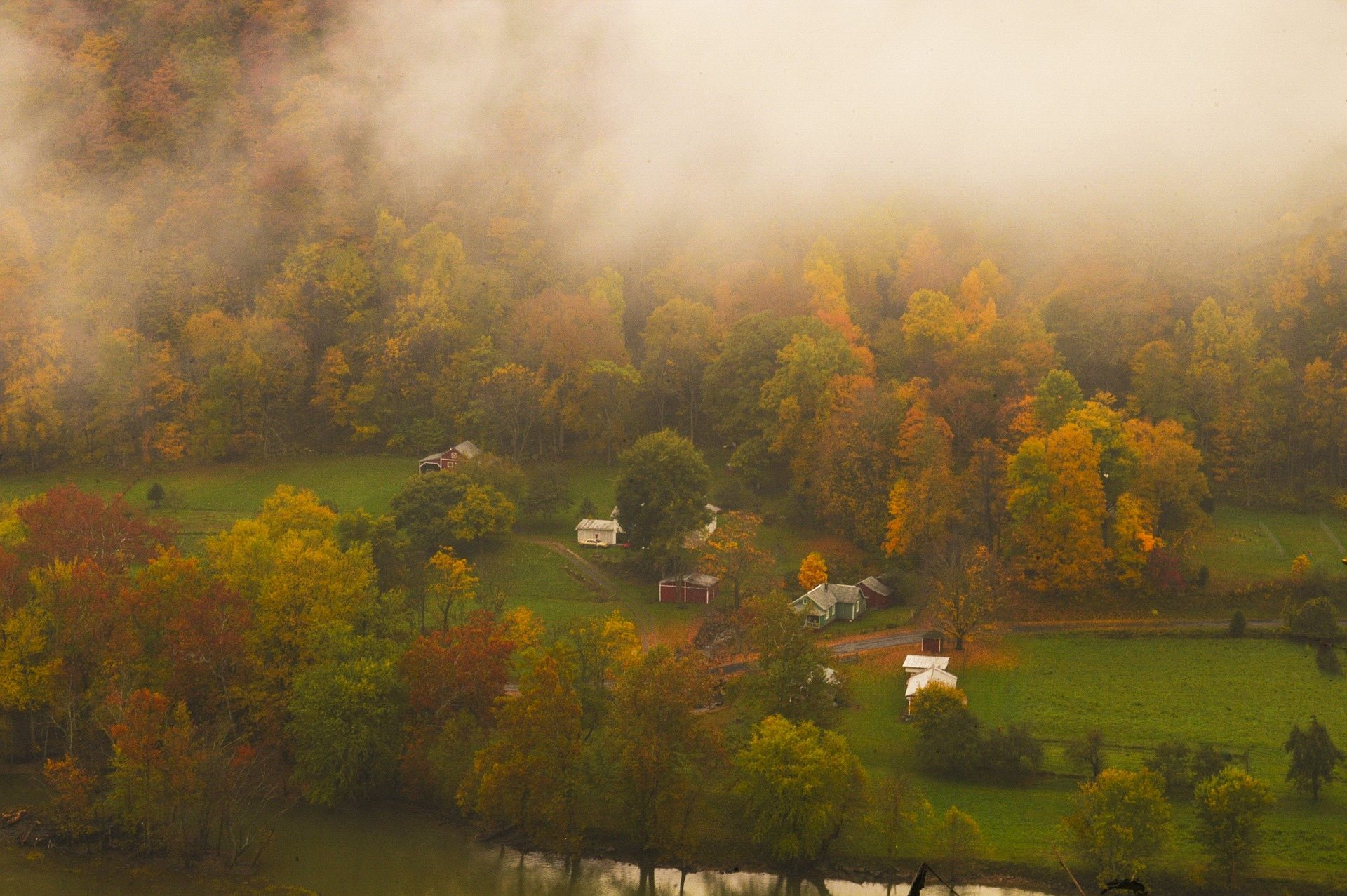 Best of · Greenbrier Valley
The Best Hikes in Watoga State Park
Watoga's trails one by one with the state park's own mileages and difficulty ratings, from the 1-mile Arrowhead climb to 5.5 miles of the Allegheny Trail.
7 min read · October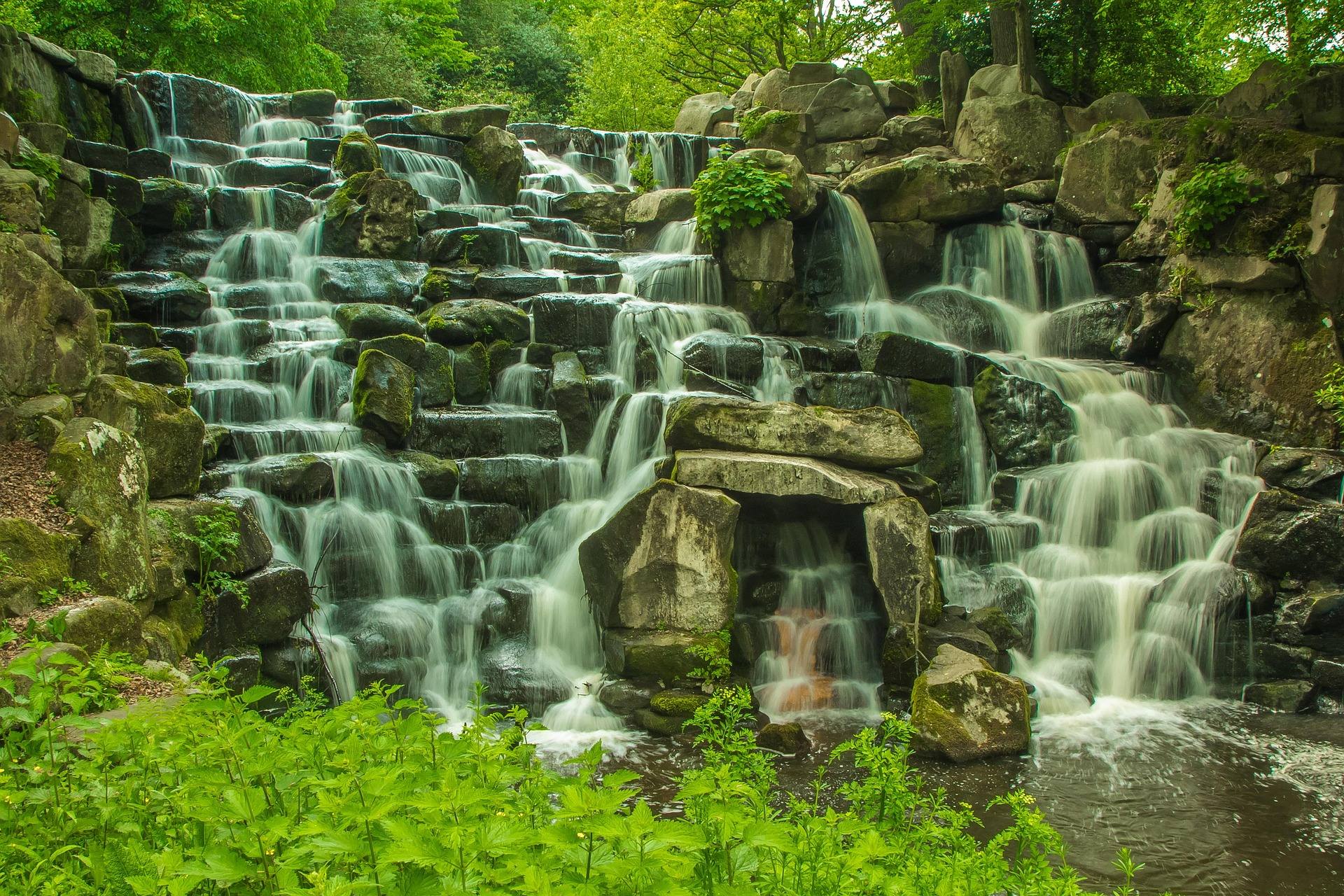 Destination · Southern Coalfields
Twin Falls Resort State Park: A Complete Guide
What the state park publishes about Twin Falls Resort State Park: the 1.25-mile Falls Trail, three ridge loops, sunset from Still Run Ridge, and camping.
7 min read · June Destination · Greenbrier Valley
The Greenbrier River Trail
A guide to the Greenbrier River Trail: trailheads, camping, bikepacking it end to end, tubing alongside it, and the best sections for a day out.
8 min read