
Every organization we link to: local tourism offices, the state and federal agencies that manage the land, the nonprofits and clubs that keep access open, and the universities doing the research.
West Virginia has roughly 1.5 million acres of public land and a handful of places that carry almost all of the attention. The consequence is that a great deal of very good ground sits nearly empty, usually for one of three reasons: nobody has heard of it, the road in is gated or rough, or it is undeveloped and has nothing to advertise. Those are the places below — of them across regions.
Almost Heaven Swings
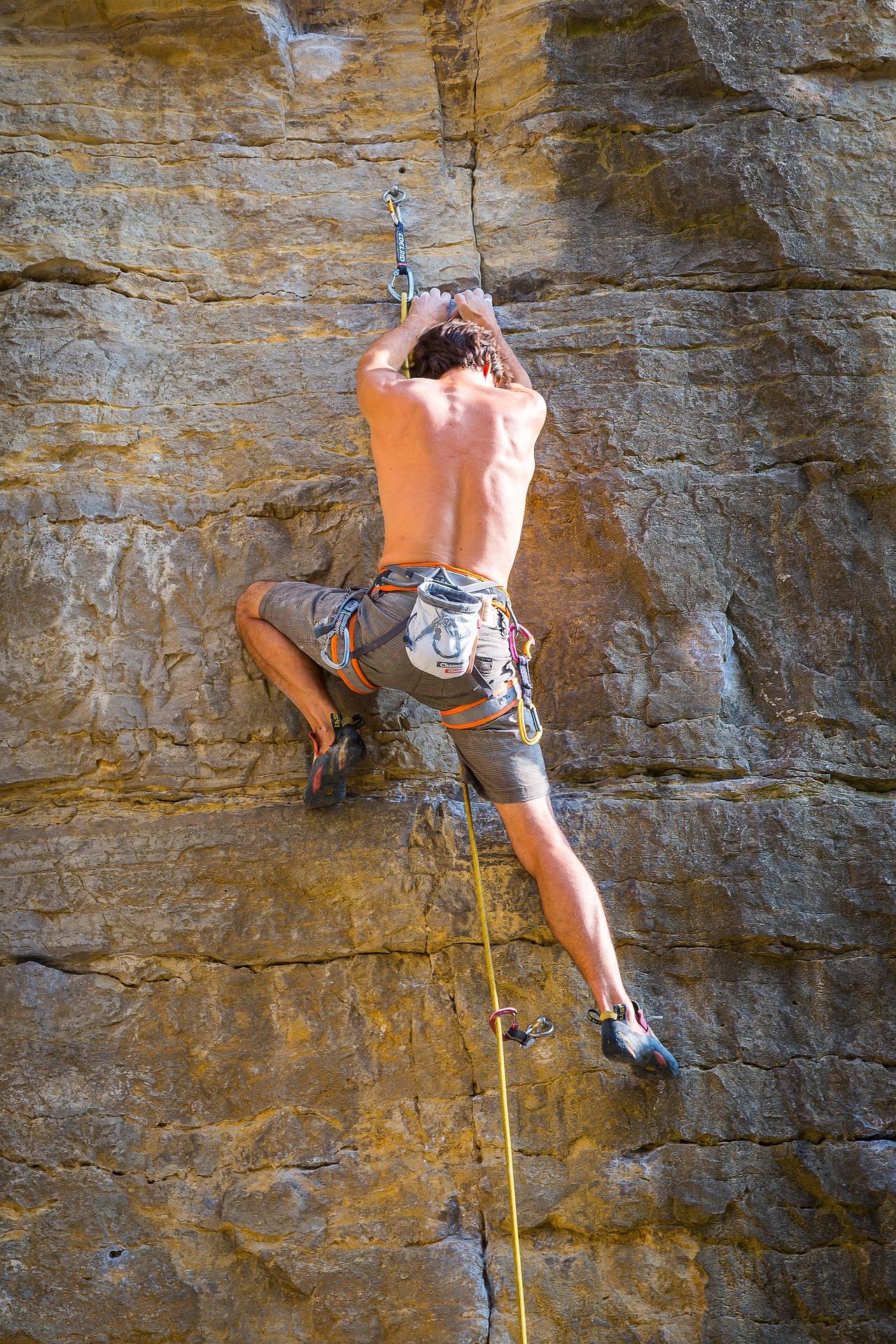
Two quartzite fins in Pendleton County
Nelson Rocks is a pair of parallel quartzite fins standing in Pendleton County, in the Potomac Highlands. The rock is the hard, resistant kind that gives this part of West Virginia its fin-and-ridge landscape, and the two blades here run alongside each other rather than as a single wall.
That geometry is the whole reason the place works the way it does. Two parallel fins with a gap between them is what allows a bridge, and the bridge is what makes this route different from the cable-and-rung routes that exist elsewhere.
The operation on the property trades as NROCKS, and what it runs is a via ferrata — one of the original American examples of the form. This is not a crag with a parking lot and a guidebook. It is a built route with staff on it.
A cable-and-rung route with a bridge in the middle
A via ferrata is a fixed line of steel: cable bolted to the rock that you clip into, with rungs where the rock gives you nothing to stand on. You move along the cable rather than lead a pitch, which is why no climbing experience is required to do it.
The route here climbs both fins, and the published figure for the hardware is roughly 1,000 for the combined count of rungs and feet of cable. That figure is given as a single number and not broken down further, so read it as a measure of scale rather than a specification.
The centerpiece is a 200-foot suspension bridge slung between the two fins, roughly 150 feet above the ground. Crossing it is not optional scenery you can view from the side; it is part of the line.
Guided and reservation-only, so book early
You cannot show up and walk onto this route. Everything is guided and reservation-only, which means the guide count sets how many people are on the fins in a day and how far ahead you need to commit.
Autumn is the season to book well in advance. The Potomac Highlands draw heavily in fall, and a reservation-only route with limited daily capacity fills accordingly. If a specific October weekend matters to you, treat it as something to secure months out rather than weeks.
Pricing, age and weight minimums, group sizes, operating months and weather-cancellation policy are all NROCKS's own to publish, and none of them are in this site's record. Get them from nrocks.com before you plan travel around a date.
Three to four hours of continuous exposure
Plan on roughly three to four hours on the route. That is a long time to be moving on steel, and the defining fact about those hours is that the exposure is continuous — there is no easy middle stretch where the ground comes back up to meet you.
No climbing experience is needed, and that is a real statement about technique, not about nerve. The skills the cable asks for are clipping, stepping and holding on. What it asks for beyond that is a tolerance for height that lasts the whole outing, including the bridge.
If someone in your group is unsure about heights, this is the wrong route to find out on, because turning back partway along a one-way fixed line is not a simple matter. Raise it with NROCKS when you book and let their guides advise.
Gloves, closed-toe shoes, and a camera you can hold one-handed
Two small items make a large difference: closed-toe shoes and gloves. Steel rungs and steel cable are hard on bare hands over three or four hours, and rungs are unkind to exposed toes.
Photographers should think about the mechanics before the composition. Everything worth shooting is on the route itself — the bridge between the fins, the drop beneath it — and reaching any of it means going with a guide and working a camera one-handed while clipped in. A strap or a chest mount is the difference between getting the shot and dropping a lens 150 feet.
There is no viewpoint arrangement published for people who want the bridge without the route, so do not plan on shooting it from the ground.
If you were thinking of bringing a rack
Quartzite fins of this kind are exactly the rock that draws trad climbers elsewhere in the Potomac Highlands, and it is a reasonable thing to wonder about. The answer here is that no routes, access arrangements or independent climbing policy are published for Nelson Rocks.
That is not the same as a prohibition, and it is not permission either. It means the question has to go to the property. Contact NROCKS directly before you build any plan that involves independent climbing, and take their answer as the operative one.
For roped climbing in this region that is documented and open, the Seneca Rocks area is the better-known starting point. What NROCKS itself offers is the guided via ferrata, and it is the reason to come.
Reach people planning this trip
Placement alongside guides for outfitters, guides, shops and lodging.
List your business hereQuestions
how long does the nrocks via ferrata take
do you need climbing experience for the nelson rocks via ferrata
how high is the nrocks suspension bridge
can you climb at nelson rocks without a guide
Read next
Guide · Potomac Highlands
Climbing Seneca Rocks: A First-Timer's Guide
What a first day on Seneca Rocks involves: 375-plus multi-pitch trad routes, the Apr-Oct season, permitted guides, and the summit you can only climb to.
7 min read · May Best of · Potomac Highlands
The Best Hikes Near Seneca Rocks
Trail-by-trail guide to walking around Seneca Rocks: the 1.3-mile rock trail, the 24-mile North Fork ridge, Seneca Creek and Spruce Knob.
7 min read · October Itinerary · Potomac Highlands
Three Days in the Potomac Highlands
A three-day Potomac Highlands itinerary: Blackwater Falls, Dolly Sods, Seneca Rocks and Spruce Knob, with realistic driving and the forest roads to respect.
8 min read