
Every organization we link to: local tourism offices, the state and federal agencies that manage the land, the nonprofits and clubs that keep access open, and the universities doing the research.
West Virginia has roughly 1.5 million acres of public land and a handful of places that carry almost all of the attention. The consequence is that a great deal of very good ground sits nearly empty, usually for one of three reasons: nobody has heard of it, the road in is gated or rough, or it is undeveloped and has nothing to advertise. Those are the places below — of them across regions.
Almost Heaven Swings
What the fin actually is
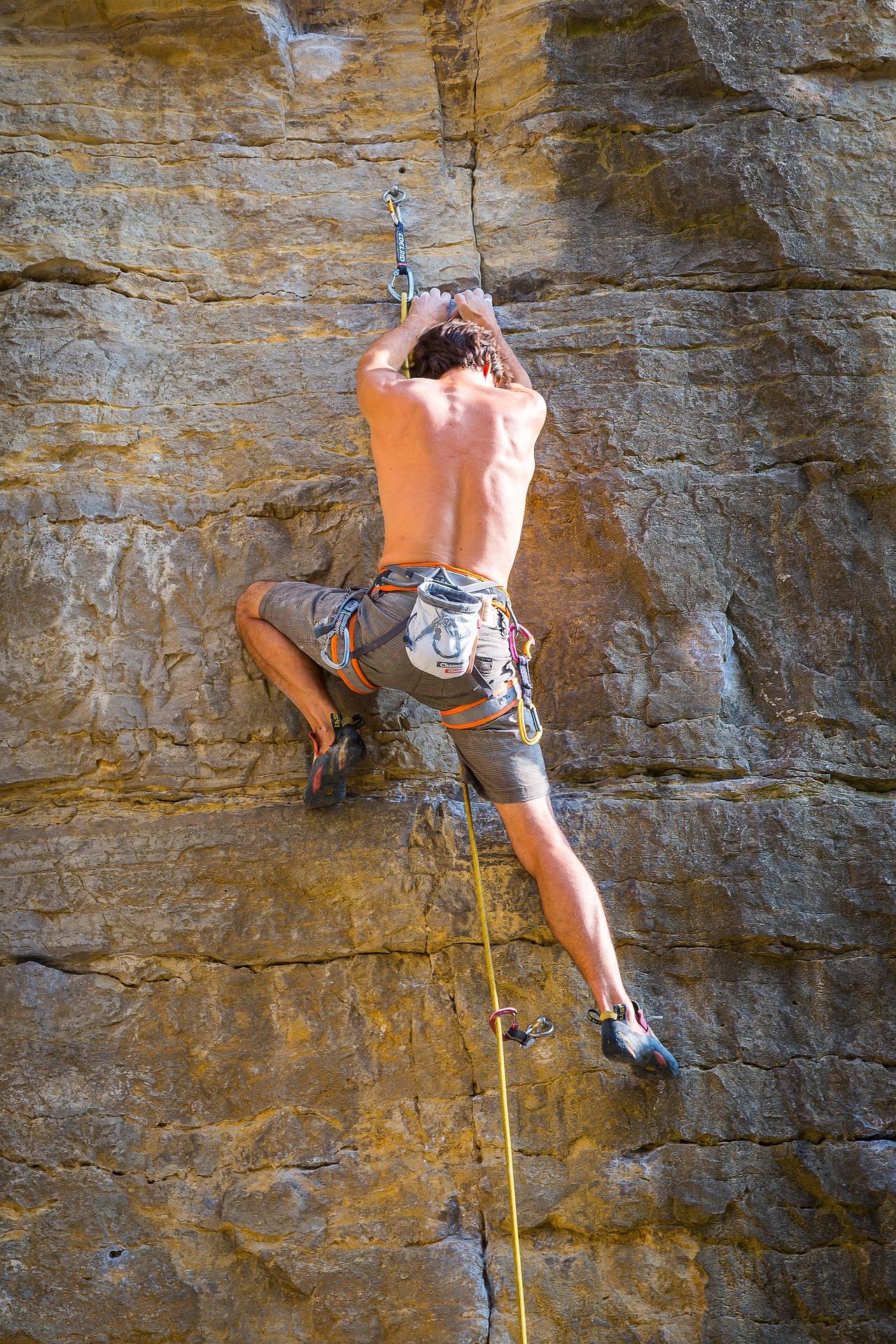
Anyone approaching this as a Seneca Rocks climbing beginner should start with the rock and not with the route list. Seneca is a 900-foot fin of near-vertical Tuscarora quartzite standing above the North Fork of the South Branch, the most recognizable rock formation in the eastern United States, and the only true summit in the East that can be reached only by technical climbing. Quartzite is hard, and that is why the fin is still standing while the softer ground around it wore away. It is also why the rock takes gear well and gives back very little in the way of comfortable holds.
There are more than 375 routes on it, mostly multi-pitch traditional lines running from moderate to hard. The formation was used as a training ground for military mountaineers in the Second World War, which tells you something about how it was regarded even before recreational climbing arrived in numbers. The Gendarme, a famous freestanding pinnacle here, collapsed in 1987 — a reminder that the crag is not a fixed object. Seneca Rocks sits on the Monongahela National Forest, and the Forest Service is the agency whose rules apply on it.
Why a Seneca Rocks climbing beginner hires a guide
Traditional climbing at Seneca is rated advanced, and the reason is not the difficulty of individual moves. It is committing multi-pitch terrain with real rescue considerations: once you are three pitches up a fin, getting a hurt or frightened partner back to the ground is a problem you have to solve yourself, in a place where help is not close. Beginners who have only climbed in a gym or on single-pitch sport routes are missing the parts of the skill set that Seneca leans on hardest, and the crag is unforgiving about that gap.
Guide services operate at Seneca Rocks under Monongahela National Forest permits, and hiring one is the normal way for a first-timer to get up the rock. A guided day gets you onto real multi-pitch terrain with someone who knows the descent, which is the piece that catches people out. Friends of Seneca handles trail work, hardware and rescue infrastructure at the crag. That stewardship is worth knowing about before you arrive, both because it is the reason the approaches and fixed gear are in the state they are in, and because it is a group worth supporting if you keep coming back.
What the climbing asks of you
Traditional climbing means the leader places protection in the rock and the second removes it, so nothing is waiting for you on the wall — which is the part a Seneca Rocks climbing beginner coming from indoor walls usually has not done. On multi-pitch routes that skill has to run alongside anchor building, belaying from a stance rather than the ground, managing rope at cramped ledges, and getting back down. The descent from a fin is not a walk off the back the way it is at many crags — this is a formation with a genuine summit, and coming down is part of the route, not an afterthought once the climbing is finished.
The other thing quartzite asks for is respect for the weather. Wet rock changes the friction and the consequences, and a fin this exposed catches wind that a sheltered wall would not. If you are going with a guide, the gear conversation is theirs to have with you. If you are going on your own, the honest test is whether you have led multi-pitch trad elsewhere and managed a retreat from partway up something. Seneca is not the place to find out how that goes for the first time, and the rescue considerations the crag is known for are exactly the ones a retreat creates.
The summit, and the trail that does not reach it
The summit is the point of the place. It is reachable only by technical climbing, which makes it different from every other high point in the East that has a trail, a road or a tower on top. Standing on it is the reason people drive from three states away for a weekend, and the reason the crag has held its reputation across generations of climbers rather than fading as sport climbing took over elsewhere. It is also why the summit is not a destination you can add to a hiking day here on a whim: reaching it means a multi-pitch route, and a multi-pitch route means the whole apparatus of rope, gear, partner and descent plan. The 900 feet of quartzite between the river and the top do not admit any shortcuts, which is the honest appeal of the place.
There is a hiking trail on the north side, 1.3 miles with a stairway, that reaches an observation platform and needs no gear at all. It is the right thing to do with non-climbing company, and the right thing to do the day before, because it puts the scale of the fin in front of you. It stops below the summit. No amount of scrambling from the platform turns it into a route to the top, and the Forest Service has built the trail on the assumption that you will not try.
When the season runs
The trad-climbing season here is April through October. May sits in the good part of it: the rock has dried out from the worst of the spring wet, the leaves are back on the hardwood below without the summer heat having arrived, and the days are long enough that a slow party on a long route is not racing the light. Autumn brings the other peak, with cooler friction and the color in the valley, and it brings more people with it. Either way the useful habit is to check the forecast for the ridge rather than for the valley floor, because a fin standing 900 feet above the river is in different weather from the road below it, and a guided day that has to be called off for wind is a day nobody enjoys.
Summer at Seneca is hot on a south-facing fin with no shade, which is worth planning around rather than discovering at midday. The shoulders of the season carry the risk of wet rock and cold belays. Outside April to October, the crag is not part of the published season at all, and a fin this exposed in winter is a serious undertaking rather than a casual one. Nothing about the calendar changes the descent, either: whatever month you climb in, you are coming off a summit rather than walking away from the base of a single pitch, and the light you have left when you top out is the light you have to work with. Start early enough that a slow pitch does not cost you the descent.
Other places to start
Nelson Rocks, also in Pendleton County, is the usual answer for someone who wants the exposure without the climbing skills. Its twin parallel quartzite fins hold one of the original American via ferratas — a guided cable-and-rung route with a 200-foot suspension bridge strung between the fins, roughly 150 feet above the ground, with around a thousand feet of cable and rungs in total. It takes roughly three to four hours, needs no climbing experience, and is continuously exposed. It is reservation-only and guided, and it books up well ahead in autumn.
If you want to build multi-pitch trad experience before coming back to Seneca, the New River Gorge holds a deep traditional inventory beyond the sport routes it is better known for. Cheat Canyon is another West Virginia option, with access stewarded by the Cheat Canyon Climbers Coalition. On the via ferrata, closed-toe shoes and gloves make a large difference to how the three or four hours feel. None of these are substitutes for Seneca, and they are not meant to be — the fin is the only one of them with a summit you cannot reach any other way. They are the places to put in the multi-pitch days that make a guided Seneca route the start of something rather than the whole of it.
Reach people planning this trip
Placement alongside guides for outfitters, guides, shops and lodging.
List your business hereQuestions
Can a beginner climb Seneca Rocks?
How tall is Seneca Rocks?
How many routes are there at Seneca Rocks?
When is climbing season at Seneca Rocks?
Can you hike to the summit instead of climbing?
What is there to do at Seneca if I am not climbing?
Read next
 Destination · Potomac Highlands
Hiking Dolly Sods
A practical guide to hiking Dolly Sods Wilderness: the main trails, route options, why it is navigationally serious, and how to reach Bear Rocks.
9 min read Destination · Potomac Highlands
Things to Do in Davis and Thomas, West Virginia
A guide to Davis and Thomas, West Virginia: Blackwater Falls, Dolly Sods access, Canaan Valley skiing and two of the best small towns in Appalachia.
8 min read Destination · Potomac Highlands
Blackwater Falls State Park
A complete guide to Blackwater Falls State Park: every waterfall and overlook, Lindy Point at sunset, the trails, lodging and the best season to visit.
8 min read · October