
Every organization we link to: local tourism offices, the state and federal agencies that manage the land, the nonprofits and clubs that keep access open, and the universities doing the research.
West Virginia has roughly 1.5 million acres of public land and a handful of places that carry almost all of the attention. The consequence is that a great deal of very good ground sits nearly empty, usually for one of three reasons: nobody has heard of it, the road in is gated or rough, or it is undeveloped and has nothing to advertise. Those are the places below — of them across regions.
Almost Heaven Swings
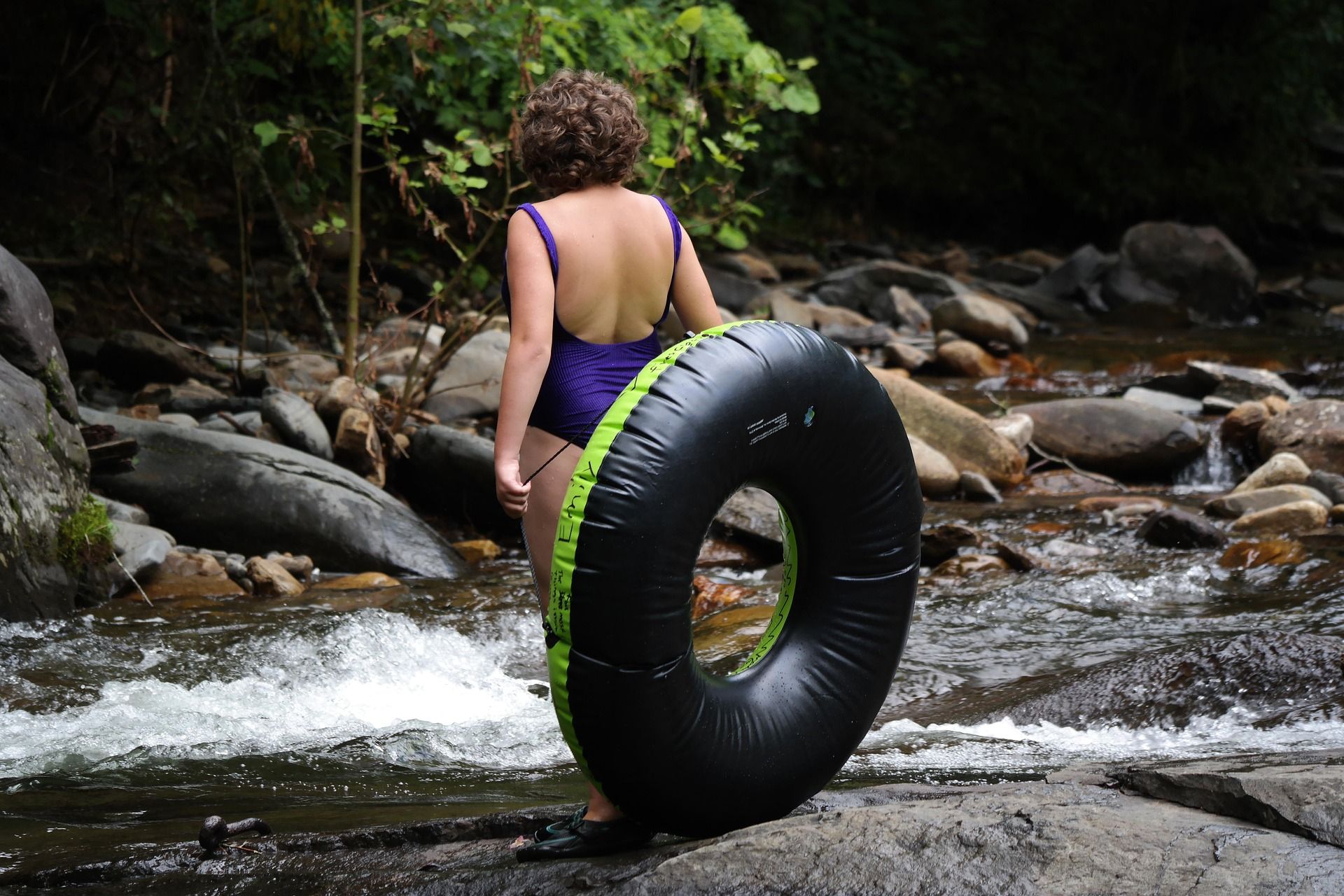
The float itself
Shenandoah River tubing in West Virginia means one run: Millville Dam down to Harpers Ferry, 2.5 miles, rated Class I–II, taking 1.5 to 3 hours depending on flow. The season runs May through September. River Riders is the outfitter, the trip is self-guided, coolers are allowed, and the shuttle is included. The minimum is 4 years old and 30 pounds, which makes it the tube float in this state that genuinely works with small children. It is also the most developed tubing operation in West Virginia, and that shows in the logistics rather than in the water.
Two and a half miles spread over as much as three hours is a slow float, and the appeal is the setting rather than the current. You come down toward the confluence of the Shenandoah and the Potomac with Harpers Ferry ahead and the heights standing above it on both sides. Three states are visible from that point. The rapids upstream of town — the Shenandoah's Staircase, rated Class I–III — are the rafting water rather than the tubing water, and they are a separate booking with a separate outfitter briefing.
Booking it
The booking rules for Shenandoah River tubing in West Virginia are short and specific. There is a two-person minimum on a reservation, so a solo tube trip is not on offer. Season passes run Thursday to Sunday, 10:30 to 2:30, Memorial Day to Labor Day — a narrower window than the May-to-September float season, and worth checking against your dates if a pass is the plan. Coolers are allowed, which is unusual enough to be worth saying, so the cooler is a decision rather than a hope. A season pass is only worth buying if your dates fall inside that Thursday-to-Sunday window.
Glass and disposable containers are prohibited or discouraged on most managed river sections in West Virginia, so pack the cooler accordingly — cans, and nothing you would mind losing. Parking is the part that actually goes wrong. Parking in Harpers Ferry fills early and the national historical park runs a shuttle from the visitor center. Use it. Arriving late on a July Saturday and hunting for a space in Lower Town is how a 1.5-hour float becomes a five-hour day. The shuttle is included in the trip, so the car only has to reach the outfitter rather than both ends of the float.
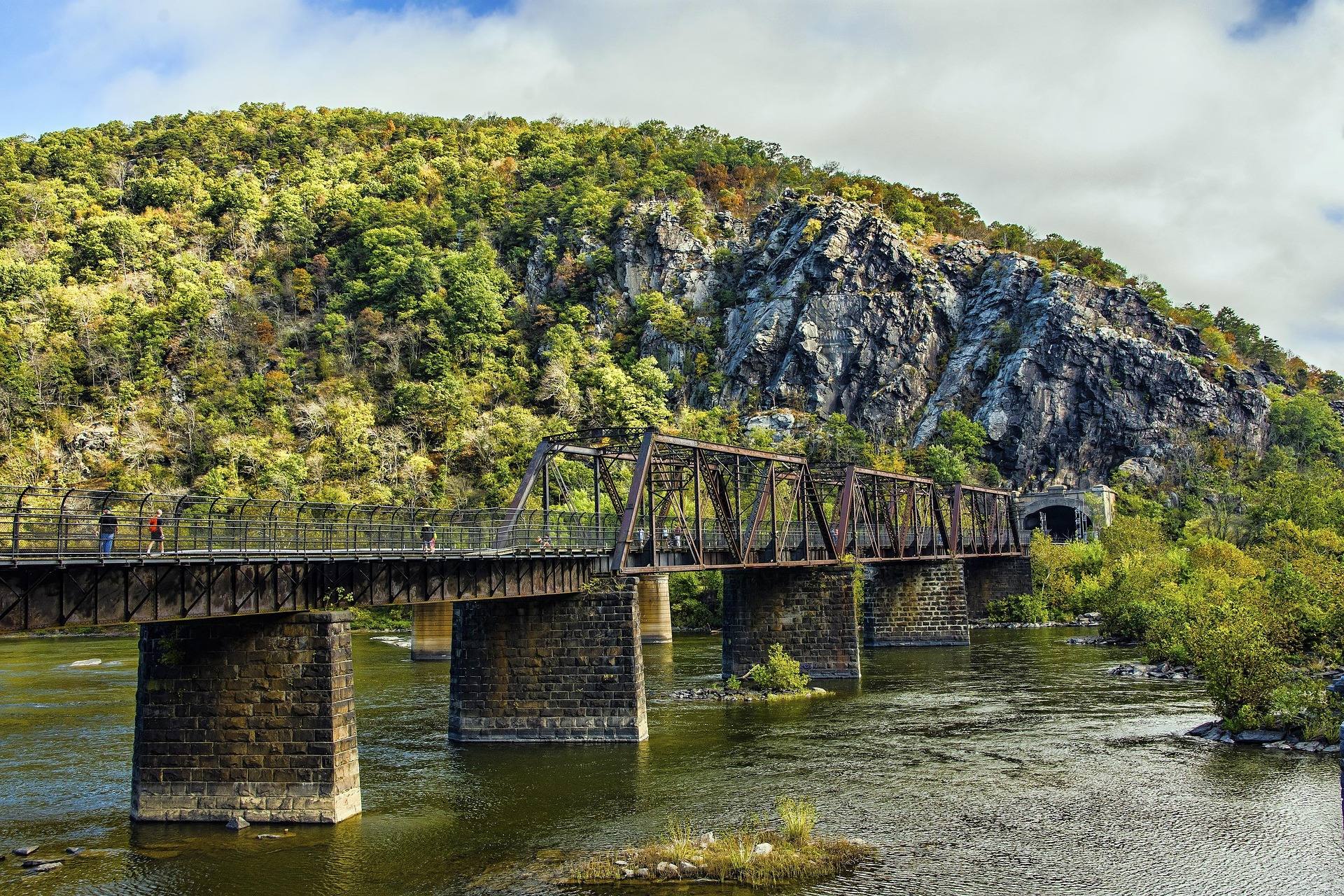
The Potomac float, which is not the same trip
The other float from Harpers Ferry is a different proposition entirely. Bakerton Road down to Potomac Wayside is 5 miles of Class II+ water, taking 2 to 3.5 hours, running May through September, through the Potomac Water Gap and the White Horse rapids. Life jackets are mandatory and there is a safety briefing before you launch. The minimum is 10 to 12 years old and about 5 feet tall. The caution attached to it is worth quoting plainly: this is moving whitewater in a tube, not a lazy river. Five miles at Class II+ is twice the distance of the Shenandoah float and a different sport.
It also crosses into Maryland and Virginia water, which is a jurisdiction matter rather than a hazard but the kind of thing to know before you go. If anyone in the group is nervous, put them on the Shenandoah flatwater float instead — same town, same outfitter, no whitewater. Splitting a mixed group across the two floats is the right call more often than people expect, and it is easier to arrange in advance than at the counter on the morning. The height minimum is there for the same reason the life jackets are, and it is not up for negotiation at the counter.
Shenandoah River tubing in West Virginia in July
July is peak tubing month in this state. The tubing season proper runs June through August, when the water is warm and shallow and low-effort river recreation is the most common way West Virginians use their local river. The Shenandoah's own float season is longer, May through September, but July is when the water is warm enough that getting out of the tube is a pleasure rather than a decision. It is also when the town is busiest, which loops back to the parking. Warm, shallow water is the whole appeal of the season, and July delivers it more reliably than June does.
Levels drop sharply in late summer on both rivers at Harpers Ferry. A late-summer float means walking sections, and it means checking flow before you drive out rather than after. Take something on your feet you can walk a gravel bar in. Sun is the other thing people underestimate on 2.5 miles of open water with no shade to speak of — the float is short in miles and long in hours, and the hours are the ones that burn you. Two and a half miles is short enough to walk out of if the level drops mid-float, which is not true of the five-mile Potomac run.
What is around it in town
Harpers Ferry National Historical Park is the anchor for all of this. The Appalachian Trail runs straight through town, and the Appalachian Trail Conservancy is headquartered a block off Washington Street, free to visit, keeping the thru-hiker photo archive. The C&O Canal Towpath runs along the Maryland bank for flat riding. The confluence view from the Point is the classic photograph, and Jefferson Rock — up the 1810 stone steps past St Peter's — is the biggest view in town for the least walking. All of that is close enough to the take-out to do on the same day, which is the argument for making the float part of a day rather than the whole of it.
If you want the view from above after the float, Maryland Heights is a steep 4 to 5 mile round trip to the overlook above the confluence on the Maryland side. That is not an after-tubing walk for most groups. Loudoun Heights, with Split Rock, is the highest of the Harpers Ferry hikes and sees a fraction of the people for a comparable payoff — daylight hours only, and no water and no restrooms on it. Maryland Heights runs 4 to 5 miles round trip before you add anything, and the Stone Fort loop takes it to 6.2 miles with 1,522 feet of gain.
The quieter float
The Cacapon River is the region's other good tubing river and much quieter. The float above Largent down to Stoney Creek takes 4 to 6 hours, is rated Class I–II, runs June through August, and is served by Cacapon River Outfitters. It runs clear through Morgan and Hampshire counties with very little commercial traffic and long, unhurried pools. Start early and take more water than you think you need: 4 to 6 hours in the sun is a different day from 1.5 hours with a shuttle waiting. The pools are the character of it: long, slow and quiet, with nothing to paddle around.
One caution there if you self-shuttle. No published confirmation exists that Stoney Creek Store is a public access site with parking, so ask before you leave a car at either end. Late summer on the Cacapon means dragging through shallow sections, the same as it does for canoes, and the same fix applies — check the level first, and shorten the float rather than walking the last mile of it. Much of the bank on the Cacapon is private, so walking out from the middle of a 4 to 6 hour float is not a straightforward option there either.
Reach people planning this trip
Placement alongside guides for outfitters, guides, shops and lodging.
List your business hereQuestions
How long does it take to tube the Shenandoah at Harpers Ferry?
What is the minimum age for tubing the Shenandoah?
What is the difference between the Shenandoah and Potomac tube floats?
When is tubing season on the Shenandoah?
Where do you park in Harpers Ferry?
Can you bring a cooler tubing?
Read next
 Best of · Eastern Panhandle
The Best Hikes at Harpers Ferry
Every Harpers Ferry hike with official NPS distances and elevation gain: Maryland Heights, Loudoun Heights, Jefferson Rock, plus current closures.
8 min read Destination · Eastern Panhandle
Things to Do in Harpers Ferry
A guide to Harpers Ferry, West Virginia: the historic Lower Town, the best hikes and overlooks, tubing and rafting, the Appalachian Trail and where to start.
8 min read Best of · Eastern Panhandle
The Best Hiking Trails in Berkeley Springs
Trail by trail on Cacapon Mountain and Sleepy Creek Mountain: the four mileages the state park publishes, the drive-up views, and what nobody publishes.
8 min read · October