
Every organization we link to: local tourism offices, the state and federal agencies that manage the land, the nonprofits and clubs that keep access open, and the universities doing the research.
West Virginia has roughly 1.5 million acres of public land and a handful of places that carry almost all of the attention. The consequence is that a great deal of very good ground sits nearly empty, usually for one of three reasons: nobody has heard of it, the road in is gated or rough, or it is undeveloped and has nothing to advertise. Those are the places below — of them across regions.
Almost Heaven Swings
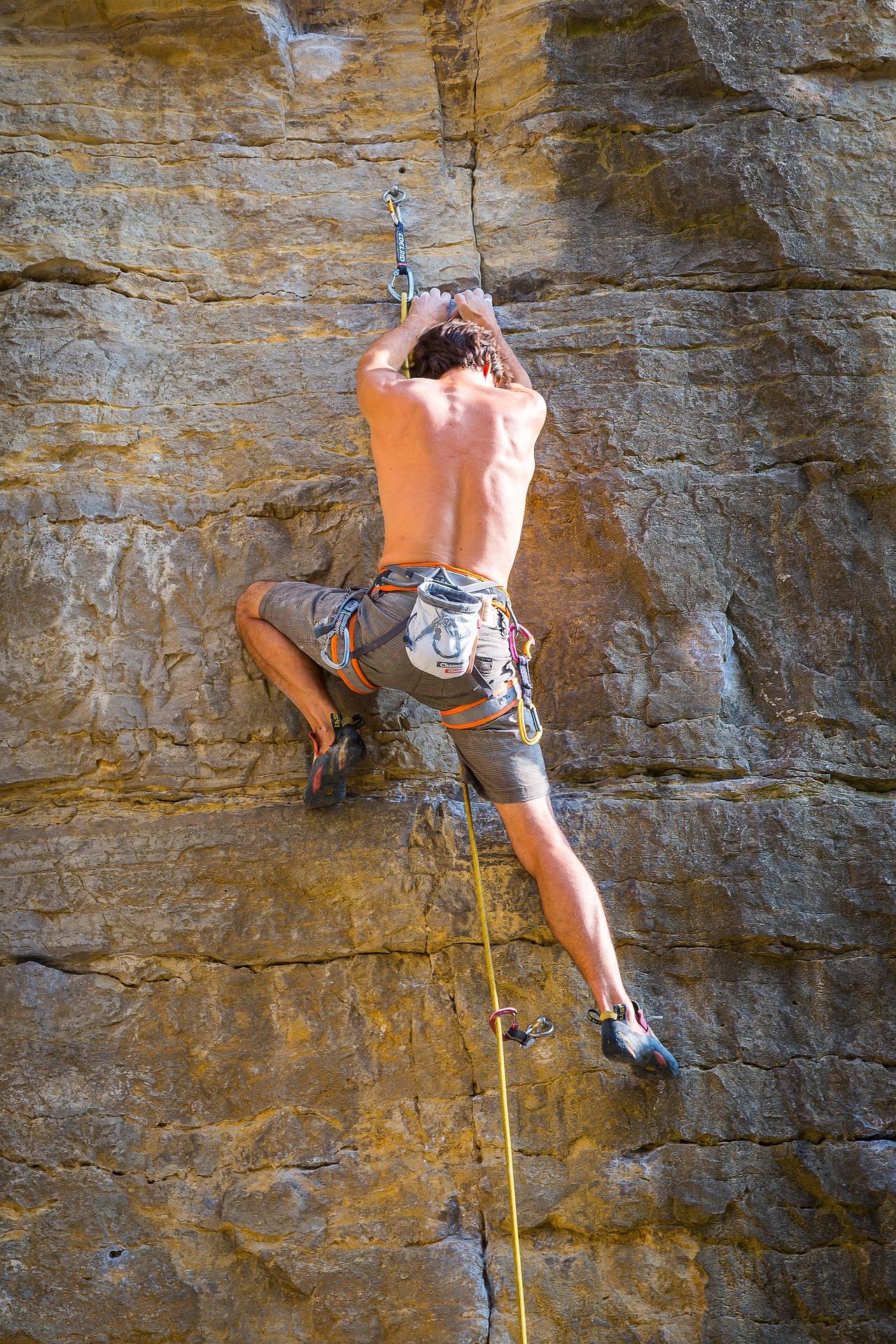
The two formations and what happens on them
Seneca Rocks is a 900-foot fin of near-vertical Tuscarora quartzite above the North Fork of the South Branch: the most recognizable rock formation in the eastern United States, and the only true summit in the East reachable only by technical climbing. Military mountaineers trained here in World War II, and the Gendarme, the freestanding pinnacle many climbers came to see, collapsed in 1987. There are 375 or more routes, mostly multi-pitch trad, moderate to hard.
Nelson Rocks, operated as NROCKS, is a pair of parallel quartzite fins in Pendleton County carrying one of the original American via ferratas: a guided cable-and-rung route with roughly 1,000 feet of rungs and cable, and a 200-foot suspension bridge between the fins about 150 feet above the ground.
The rock is the same formation at both. Tuscarora quartzite is metamorphosed sandstone, harder and more fractured than the Nuttall of the New River Gorge, and it builds both sets of fins and the North Fork Mountain outcrops. The arrangement differs: at Seneca you bring the skills and the rack, or hire a guide; at Nelson Rocks the hardware is fixed and the guide mandatory.
Experience required, stated plainly
Nelson Rocks is the answer for anyone who has never climbed. The via ferrata asks no technical skill, but it is continuously exposed for the full three to four hours on cable and rungs. The barrier is not skill; it is tolerance for air underneath you.
Seneca Rocks is a trad venue. The routes are mostly multi-pitch, and 900 feet of vertical quartzite is not somewhere to learn the craft alone. If you want the summit and do not lead trad, hire one of the guide services, which work under Monongahela National Forest permit.
Sport climbers should temper expectations. No sport-specific inventory is published out of the 375-plus total, and long vertical quartzite is not what a visitor chasing bolted lines comes for. Ask Friends of Seneca what is bolted first.
Permits, access and the volunteers holding it together
No permit is required to climb at West Virginia's major areas, and none to hike Monongahela National Forest trails, so the Seneca side carries no paperwork. Some federal recreation sites do charge a modest day-use fee, which an America the Beautiful pass covers.
Access is still not uniform. Crags here sit on patchworks of federal, state and private ground, some closing seasonally for raptor nesting or at a landowner's request; notices appear through the Access Fund and the climber-run access databases. Friends of Seneca maintains hardware and rescue infrastructure on volunteer funding. Park where you are told: illegal parking is the most common way crags close.
Nelson Rocks works the other way around. NROCKS is reservation-only and guided, autumn dates go early, and no rates, age limits or schedule are published, so settle those when you reserve. Nothing covers independent climbing there, so call before bringing a rack.
Timing, and why everyone comes in October
September and October are the season, for a physical reason rather than a scenic one: humidity drops and rock friction reaches its annual peak, which is why most climbers plan West Virginia trips for October. It is also the busiest stretch, with trail-town lodging booking months ahead and NROCKS autumn dates going early.
The shoulders beat their reputation. May and June give open climbing with decent friction before the humidity. November and December leave the rock cold and grippy, leaves down, views open, trails empty. July and August are humid and hot below 2,500 feet.
Plan the driving as carefully as the climbing. Fuel and services thin out in Pendleton and the surrounding counties. Assume no cell service, download offline maps, and check Monongahela National Forest alerts for road closures.
Exposure, gear and the risks that are actually local
The numbers describe two sensations. Seneca is 900 feet of near-vertical rock climbed in pitches, and the reward is a summit with no walk-up alternative. Nelson Rocks concentrates its exposure into one line: rungs and cable up the first fin, the 200-foot bridge 150 feet in the air, then the second fin, with no pause and no simple retreat.
Closed-toe shoes and gloves make a large difference across three to four hours of gripping steel. On the Seneca side, dress for ground colder and wetter than the valleys, and carry insulation and a shell whatever the trailhead forecast says.
Two local hazards deserve naming. Timber rattlesnake and northern copperhead occur statewide and favor what a climber uses, warm ledges and rocky terrain, so watch your hands. Rescue here often means volunteer squads and a long carry-out with no helicopter option, so tell someone your plan and return time.
Non-climbers, cameras and autumn orange
A genuine non-climber option exists at Seneca. A trail with a stairway runs 1.3 miles to an observation platform on the north side and needs no gear — the only way to get a high view on foot, since the summit itself cannot be reached any other way. Nelson Rocks has no published equivalent: everything worth seeing there sits on the guided route.
Photographers face the same asymmetry. The 1.3-mile trail gives an elevated angle without gear, and climbers on the routes supply scale; at Nelson Rocks the frames are the bridge and the fins, worked one-handed. Between October and January this is national forest, not a state park: hunting is in season, so wear blaze orange.
The recommendation, by who is asking
Never climbed and want a big day on rock: Nelson Rocks. Guided, no experience needed, three to four hours, and a 200-foot bridge about 150 feet up. Reserve well ahead for autumn, wear closed-toe shoes, bring gloves.
Lead trad and want the summit: Seneca Rocks. That is 375-plus routes on Tuscarora quartzite, moderate to hard, topping out on the only true summit in the East technical climbing alone can reach. No permit needed; give Friends of Seneca something toward the hardware.
Mixed groups: Seneca, because the 1.3-mile trail gives non-climbers a real day while the party climbs. Sport climbers chasing bolts: neither record supports the trip, since Seneca publishes no sport inventory and Nelson Rocks no independent climbing. Come in October if you can, and book the bed first.
Reach people planning this trip
Placement alongside guides for outfitters, guides, shops and lodging.
List your business hereQuestions
Do you need climbing experience for the Nelson Rocks via ferrata?
Do you need a permit to climb Seneca Rocks?
When is the best time of year to climb at Seneca Rocks?
Is there a way to see Seneca Rocks without climbing?
Read next
Guide · Potomac Highlands
Climbing Seneca Rocks: A First-Timer's Guide
What a first day on Seneca Rocks involves: 375-plus multi-pitch trad routes, the Apr-Oct season, permitted guides, and the summit you can only climb to.
7 min read · May Best of · Potomac Highlands
The Best Hikes Near Seneca Rocks
Trail-by-trail guide to walking around Seneca Rocks: the 1.3-mile rock trail, the 24-mile North Fork ridge, Seneca Creek and Spruce Knob.
7 min read · October Guide · Potomac Highlands
Hiking the North Fork Mountain Trail
How to plan 24 waterless miles on West Virginia's driest ridge: the Germany Valley outlooks, the water problem, riding it, and when the ridge is too hot.
8 min read · October