
For scenery
Summersville Lake
Summersville, unquestionably. Sandstone walls, clear water, and coves reachable only by boat.
Full guide to Summersville Lake →Corps of Engineers reservoirs — Summersville, Sutton, Burnsville, Stonewall Jackson, Beech Fork, East Lynn — plus Cheat Lake and the pooled sections of the Ohio, Kanawha and Monongahela. Reliable water when the rivers are too low or too high.
The reservoirs are the answer when the rivers refuse to cooperate — too high in April, too low in August, too cold in November.
Corps of Engineers lakes provide sheltered water with camping alongside, and most see light traffic on a weekday.
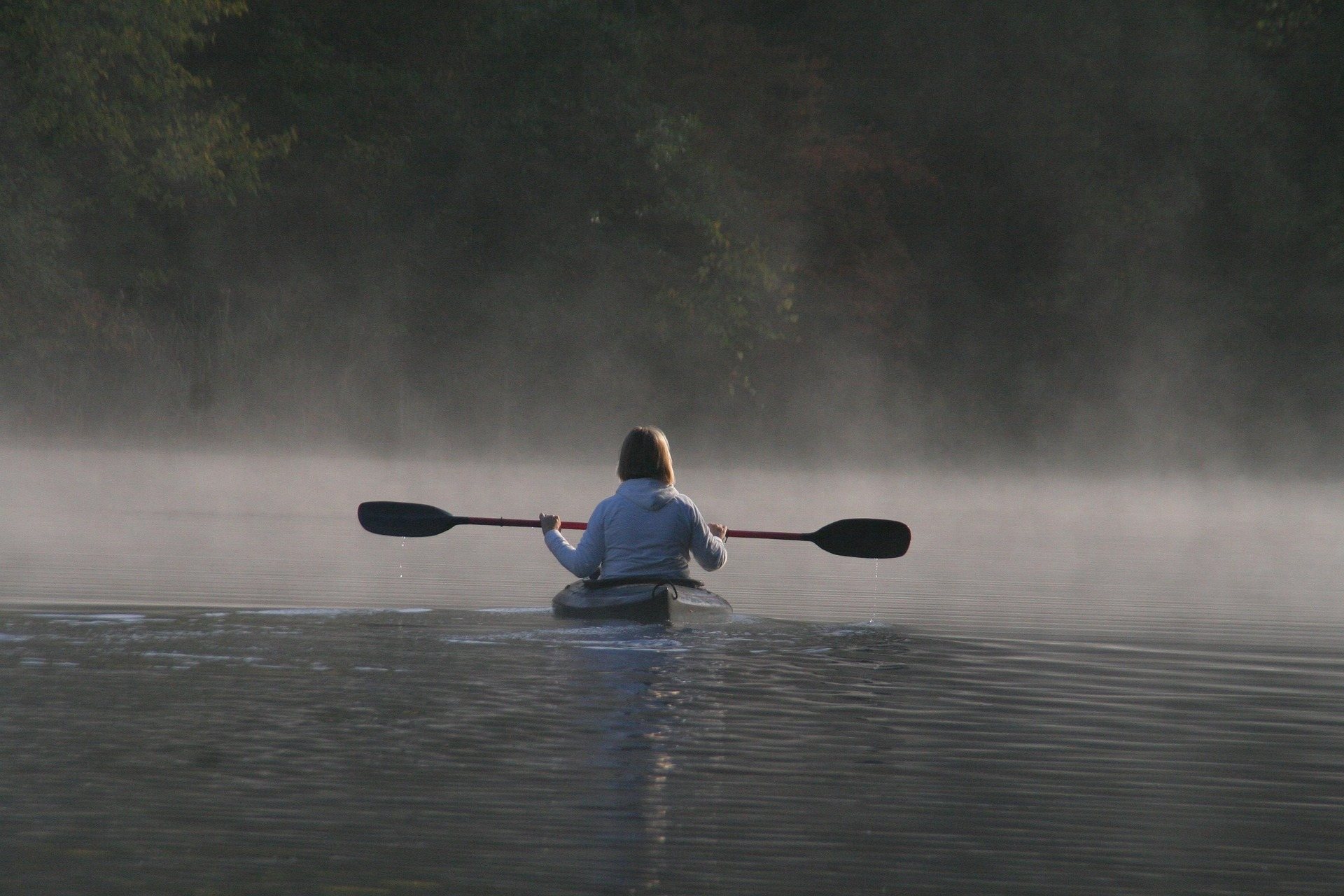
Summersville, unquestionably. Sandstone walls, clear water, and coves reachable only by boat.
Full guide to Summersville Lake →Burnsville Lake with a night at Bulltown. Quiet water, Civil War earthworks on the shore, and one of the better Corps campgrounds in the state.
Full guide to Burnsville Lake →The Ohio River Islands refuge. Sheltered back channels behind protected islands, with herons, eagles and mussel beds under you.
Full guide to Ohio River Islands National Wildlife Refuge →Corps reservoirs fluctuate for flood control, sometimes several feet in a week. A launch that worked last month may be a hundred yards from the water.
The geographic center of the state and its least-visited region.
Ohio River islands and the North Bend Rail TrailThe Ohio River corridor and the counties inland from it.
Water trails and forest trails near CharlestonThe Kanawha and Guyandotte valleys around Charleston and Huntington, containing the largest share of the state's population.
Cheat River whitewater and rail-trail networkThe northern counties around Morgantown.
West Virginia's largest lake and by a wide margin its clearest — 2,700 acres of blue-green water in a sandstone basin, popular for scuba diving, paddleboarding and boating.
A rim-top lodge above the Mill Creek arm of the New River Gorge with an aerial tram to a marina on the water.
West Virginia's largest state park at over 10,100 acres, built largely by the Civilian Conservation Corps in the 1930s.
A small park in Monroe County built around a 144-acre lake with warm-water fishing for largemouth bass, bluegill and channel catfish, plus a swimming pool.
A 1,750-acre reservoir behind a 1930s Corps of Engineers dam near Grafton, with a lodge, marina, scuba diving and steep wooded shoreline.
A long, narrow 1,730-acre impoundment of the Cheat River just east of Morgantown, with a shoreline rail-trail, boat access and the closest flatwater paddling and lakeside recreation to the city.
One of the finest and least-known trout fisheries in the Appalachians.
A 2,650-acre lake with the most developed resort facilities of any West Virginia lake park — a lodge, marina, Arnold Palmer golf course and the state's largest open-water fetch for small-boat sailing.
A 1,440-acre Corps of Engineers reservoir on the Elk River in Braxton County, with several campgrounds, quiet coves and the dam that creates the Elk tailwater fishery below.
A 968-acre Corps reservoir on the Little Kanawha with the Bulltown Historic Area on its shore — Civil War earthworks, a preserved farmstead and a well-regarded campground.
A 2,483-acre park in Gilmer County with three small fishing lakes, a campground and a network of easy trails.
Where the Shenandoah meets the Potomac and three states meet at once, with the Appalachian Trail running straight through town and the Appalachian Trail Conservancy headquartered a block off Washington Street.
The Shenandoah's Staircase rapids above Harpers Ferry give Class I–III whitewater in a resort-town setting, while the Potomac below the confluence spreads wide and slow for tubing and flatwater.
A 1,405-acre park on a horseshoe bend of the North Fork of the Hughes River, with a lodge, cabins, campgrounds, a 305-acre lake nearby and direct access to the North Bend Rail Trail.
An island in the Ohio River reached by sternwheeler from Parkersburg, holding a reconstructed 1800 Palladian mansion, horse-drawn wagon tours and quiet riverbank walking.
Twenty-two islands and several mainland tracts scattered along nearly 400 river miles of the Ohio, protecting some of the last relatively undisturbed island habitat on the river — critical for freshwater mussels, migratory birds and river-bottom forest.
A county park outside Parkersburg with a 50-acre lake and one of the better mountain bike trail networks in the western half of the state, plus camping, disc golf and the site of the old Volcano oil town.
An organized water trail on the Big Coal, Little Coal and main-stem Coal rivers south of Charleston, with maintained access points, mapped mileages and signage — the product of sustained work by the Coal River Group to turn a working-class industrial river back into a recreation asset.
A 3,981-acre park around a 720-acre Corps reservoir near Huntington, with one of the largest campgrounds in the state park system, good bass fishing and easy trails.
A 1,005-acre Corps reservoir in Wayne County with a strong bass and crappie fishery, a large wildlife management area around it and very little traffic.
The northernmost park in the system, in Hancock County at the tip of the Northern Panhandle.
On the shore of Bluestone Lake, the third-largest body of water in West Virginia, at the point where the Bluestone River meets the New.
A park just off I-64 near Beckley with an 18-acre lake, a seasonal campground, an extensive trail network used for running and mountain biking, and easy access from the interstate.
A reconstructed 1774 frontier refuge fort at the confluence of Prickett's Creek and the Monongahela River, with living-history interpretation, a boat launch and a trailhead on the Mon River Rail-Trail system.
A quiet 12,854-acre WMA in Mingo County built around a 29-acre lake, with primitive camping, warm-water fishing and public hunting in the southern coalfields.
An Arnold Palmer Signature course on the shore of Stonewall Jackson Lake, attached to a state park resort lodge.
A resort on Cheat Lake outside Morgantown with two courses, the Lakeview and the Mountainview, plus lodging and conference facilities.
The largest lake on the Monongahela National Forest, 156 acres at around 2,600 feet against the Virginia line, with two sand beaches — one on the mainland and one on an island reached by a footbridge.
A 43-acre cold-water lake ten miles from Richwood in the Monongahela National Forest, with a 33-unit campground on the shore and the Cranberry backcountry immediately behind it.
Reserved for a West Virginia operator serving this activity. The listings above and below it are unpaid.
List your business hereGroups that handle access, maintenance, licensing and conditions data for this activity. Starred entries publish updates worth following.
Every organization we link to: local tourism offices, the state and federal agencies that manage the land, the nonprofits and clubs that keep access open, and the universities doing the research.
West Virginia has roughly 1.5 million acres of public land and a handful of places that carry almost all of the attention. The consequence is that a great deal of very good ground sits nearly empty, usually for one of three reasons: nobody has heard of it, the road in is gated or rough, or it is undeveloped and has nothing to advertise. Those are the places below — of them across regions.